Podcast
Appropriate – der Podcast
APPROPRIATE explores different dimensions of ownership, its political dynamics and social impact, and ventures into thinking about alternatives to ownership. APPROPRIATE brings together researchers from different disciplines, activists and policy makers to discuss their perspectives on a wide range of topics, including the sharing economy, urban commons, housing, natural resources, reproductive medicine and bioeconomy. APPROPRIATE is the podcast of the Collaborative Research Centre "Structural Change of Property" of the Universities of Jena and Erfurt (SFB TRR 294).
Music: CC BY-SA, Song Paper Tiger's Grip by Mid-Air Machine
For questions or contributions to the podcast, please write to appropriate_podcast@protonmail.com!

Trailer

The trailer gives a small insight into the intention of the podcast and its topics.
Trailer of the podcastBook Review: Umkämpfte Transformation: Konflikte um den digitalen und ökologischen Wandel
What is green capitalism, and why is it failing? Are we witnessing an authoritarian, fossil-fuel-dependent backlash? And what does the ownership structure of ‘Deutsche Post’ (DHL) have to do with socio-ecological conflicts of transformation and digital change? This is what Irina Herb, the host of this book review, discusses with Steffen Liebig, co-editor of the book "Umkämpfte Transformation: Konflikte um den digitalen und ökologischen Wandel" ["Contested Transformation: Conflicts over Digital and Ecological Change"] (2025, Campus Verlag). He talks about results and the methodology of "bottom-up" transformation research from Jena, providing fascinating insights into the development of the DHL Group along the way. Steffen Liebig and the co-editors Klaus Dörre, Kim Lucht, Lennart Michaelis, and Johanna Sittel have spent years researching transformation conflicts in the steel industry, the automotive (supplier) industry, construction, and the logistics sector, and thereby paying particular attention to property. This edited volume brings together this research in the field of the sociology of work and offers important contributions to class analysis and transformation studies.
Guest: Steffen Liebig
Listen to on: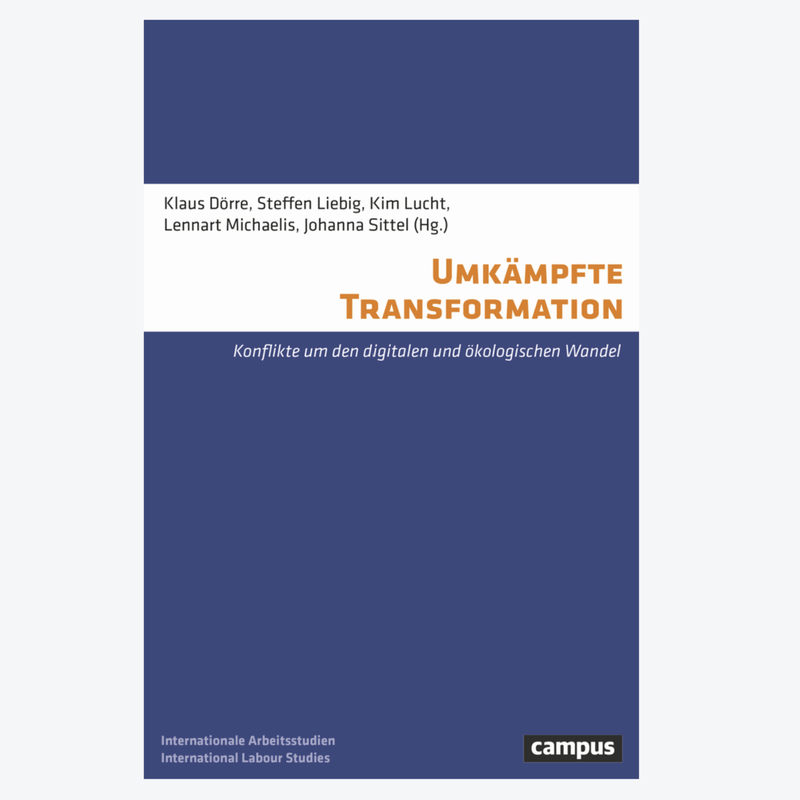
SFB Structural Change of Property – Looking Back and Ahead with Prof. Silke van Dyk
In the first episode of the second season of appropriate, the two hosts of this episode, Americanist Lena Mai (Erfurt) and Sociologist Lena Ebersbach (Jena), speak with Professor Silke van Dyk about the origins of our Collaborative Research Center (SFB) on Structural Change of Property. As a spokesperson for the SFB, Silke van Dyk provides a fascinating overview of its origins, explains why it is an interdisciplinary and globally oriented research network, and highlights key findings from the first funding phase that are shaping the current second phase of research and funding. She also addresses what property is, why it is so central to societies, and what structural change actually means.
Guest: Silke van Dyk
Listen to on:Looking Back at Eight Years of Municipalist Government in Barcelona
The movement-party Barcelona en Comú and politics of democratic ownership
In this episode, we reflect on the rise, evolution, and legacy of Barcelona en Comú, the emblematic movement-party that governed the city of Barcelona from 2015 to 2023. Joined by long-time activist and former political advisor Elia Gran, as well as researchers Silke van Dyk and Luzie Gerstenhöfer (University of Jena), the conversation explores the key ambitions, successes, and tensions of this bold experiment in municipalist governance. The episode draws from the sociological research project „Public Politics and the Future of the Commons“ to unpack strategic shifts in areas like housing, municipalization of public services as well as social and economic policies. Together, the guests consider what can be learned from the Comuns’ experience, how the party related to social movements and class politics. Now that the Comuns are out of office, the time is ripe for a candid assessment beyond their frequent representation as a European lighthouse case for alternative local politics: What did the municipalist turn achieve—and where did it fall short? Tune in for a rich researcher-activist dialogue on the possibilities and pitfalls of transforming politics from the ground up. This episode is a cooperation with the Urban Political Podcast.
Guests: Silke van Dyk, Luzie Gerstenhöfer, Elia Gran
Listen to on: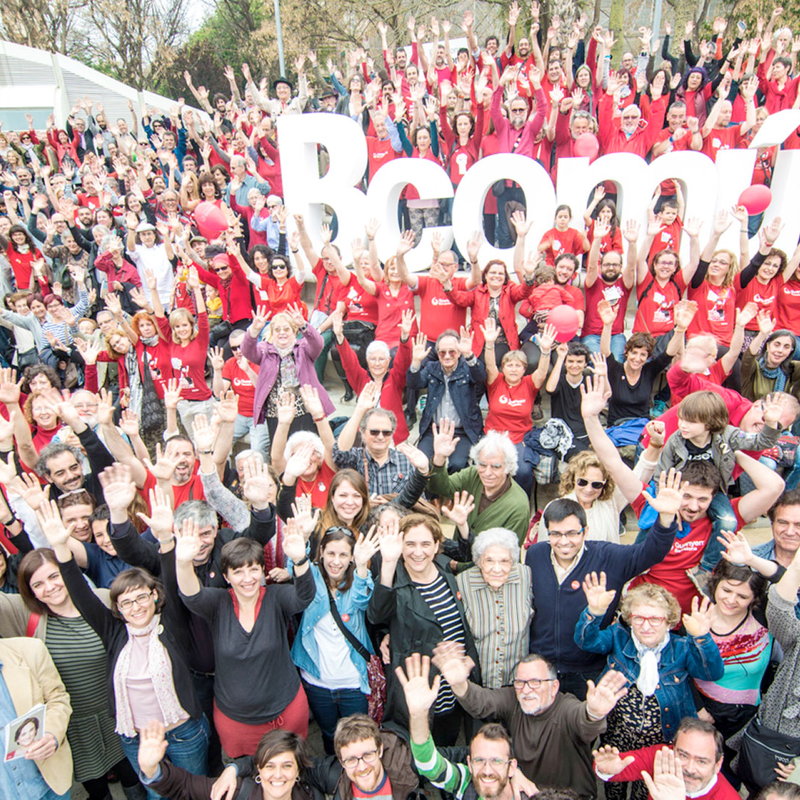
From Contested Ownership to (In)Voluntary Returns

This episode documents the workshop about interdisciplinary perspectives on the postcolonial fight for restitution and reparation. In the beginning, the organizers of the workshop, Silvan Niedermeier (University of Erfurt) and Sahra Rausch (Friedrich Schiller University Jena), will present the event. Afterwords, there is an interview with Flower Manase (National Museum of Tanzania) conducted by Aari Hönning (University of Erfurt).
The interdisciplinary workshop aimed to reassess the fight for repatriation and restitution by bringing together questions of ownership and voluntariness that are addressed in the Collaborative Research Center “Structural Change of Property” (Universities Erfurt and Jena) and the DFG-Research Unit on “Voluntariness” (Universities of Erfurt, Jena and Oldenburg). As part of the workshop, Flower Manase spoke about Restitution and the Question of “Cultural Belongings/Properties Ownership” in Tanzania. In the interview, she talks about her motivation, experiences and challenges during her work as one of the curators of the National Museum of Tanzania.
Links:
Flower Manase’s LinkedIn: https://www.linkedin.com/in/flower-manase-4b432426/
Aari Hönning‘s Podcast: https://podcasts.social/@Vergangenes_in_Wort_und_Bild
Guests: Flower Manase, Sahra Rausch, Silvan Niedermeier
Listen to on:Schulden in der neuen Kapitalismusgeschichte
Guests: Felix Krämer, Matthias Ruoss, Friedrich Lenger, Jule Govrin
Listen to on:
Private property and public commons – narrowing the gap mit Klaus Bosselmann

Klaus Bosselmann von der University of Auckland (Neuseeland) versucht in dieser Folge Privateigentum mit dem Schutz von öffentlichen Gütern zu vereinen. Global Commons, also die Atmosphäre, das Wasser, Land, Luft und die Biosphäre sind auch durch die Ausweitung des Privateigentums stark bedroht. Wie kann der Eigentumsbegriff juristisch neugedacht werden, damit das Recht effektiv zum Umweltschutz beiträgt und was kann dabei aus indigenen Ansätzen gelernt werden? Diesen Fragen wird im Vortrag von und Interview mit Rechtswissenschaftler Klaus Bosselmann nachgegangen.
Guest: Klaus Bosselmann
Listen to on: